
How Inflation Affects Construction in Florida in 2026
Introduction
Inflation continues to shape the construction industry across the United States, and Florida is no exception. In 2026, although inflation has stabilized compared to previous years, its effects are still clearly reflected in construction costs, labor availability, and project planning. As a result, builders, contractors, and property owners must adapt to a more cost-conscious and strategic construction environment.
Rising Material Costs in Florida’s Construction Market
One of the most visible effects of inflation is the sustained increase in construction material prices.
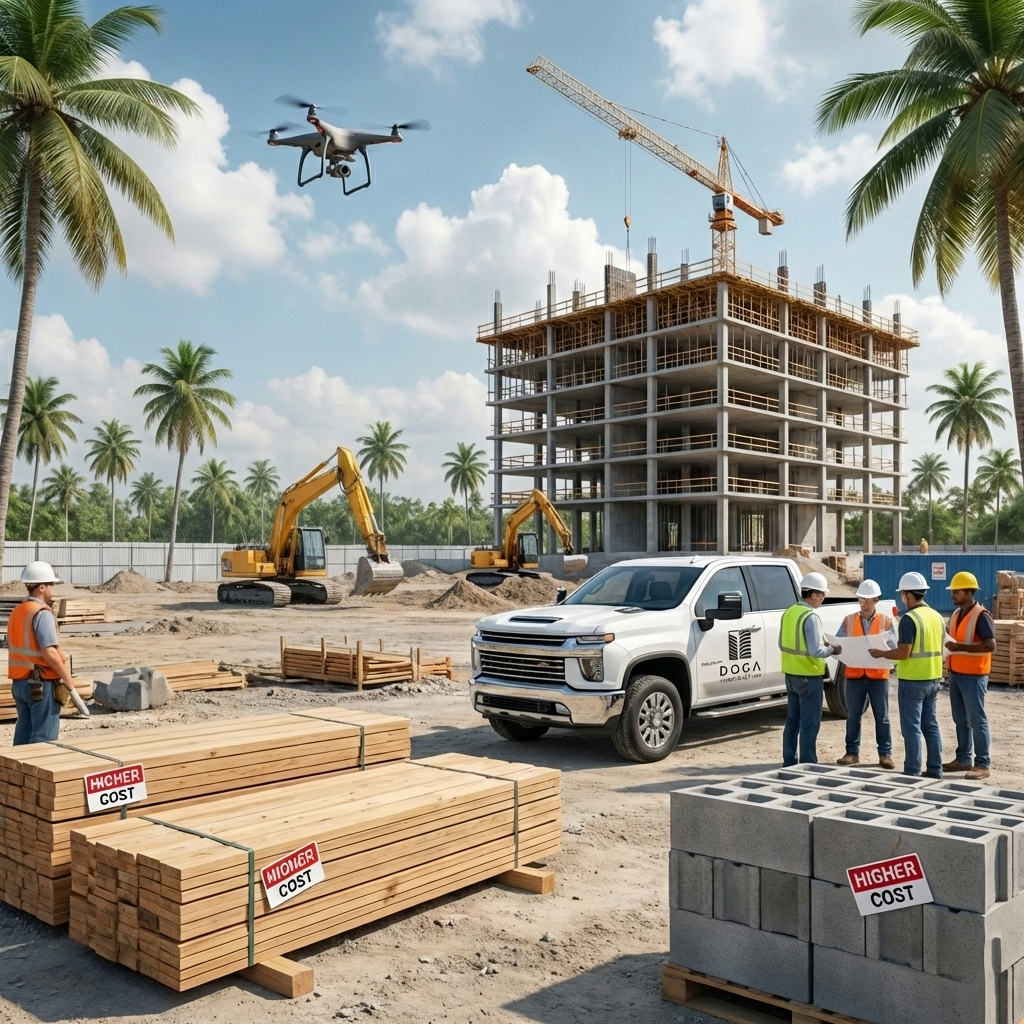
Although price spikes have moderated, materials such as concrete, steel, lumber, and roofing components remain significantly more expensive than pre-inflation levels. Consequently, construction budgets in Florida must account for higher baseline costs rather than short-term fluctuations.
Moreover, Florida’s dependence on imported materials continues to expose projects to global supply chain pressures and tariffs, which further influence overall construction costs.
Labor Shortages and Wage Inflation
In addition to materials, labor remains one of the most inflation-sensitive components of construction.
Florida continues to experience a shortage of skilled construction workers. Therefore, wages have increased steadily, especially for experienced trades and licensed professionals. While higher wages improve workforce stability, they also raise total project costs.
As a result, efficient workforce management and experienced supervision have become essential to maintaining cost control.
How Inflation Impacts Residential and Commercial Projects
Inflation affects different construction sectors in distinct ways:
- Residential construction faces higher home prices due to increased labor and material costs.
- Commercial and multifamily projects experience tighter margins and stricter budget controls.
- Public and infrastructure projects often require budget revisions to account for long-term cost escalation.
Despite these challenges, Florida remains one of the most active construction markets in the country, driven by population growth and continued development.
Planning for Construction in an Inflationary Environment
Because inflation is now a long-term consideration rather than a temporary disruption, planning is more important than ever.
Successful construction projects in Florida now rely on:
- Accurate cost forecasting
- Realistic timelines
- Strategic material selection
- Strong contractor coordination
In short, understanding inflation allows property owners to make smarter, more informed construction decisions.
Conclusion
Inflation continues to influence construction in Florida in 2026 through higher material costs, increased labor expenses, and tighter project planning requirements. However, with the right strategy and experienced professionals, construction projects can still remain efficient, durable, and financially viable.